Polysorbate 80
Price range: KSh 300.00 through KSh 1,200.00
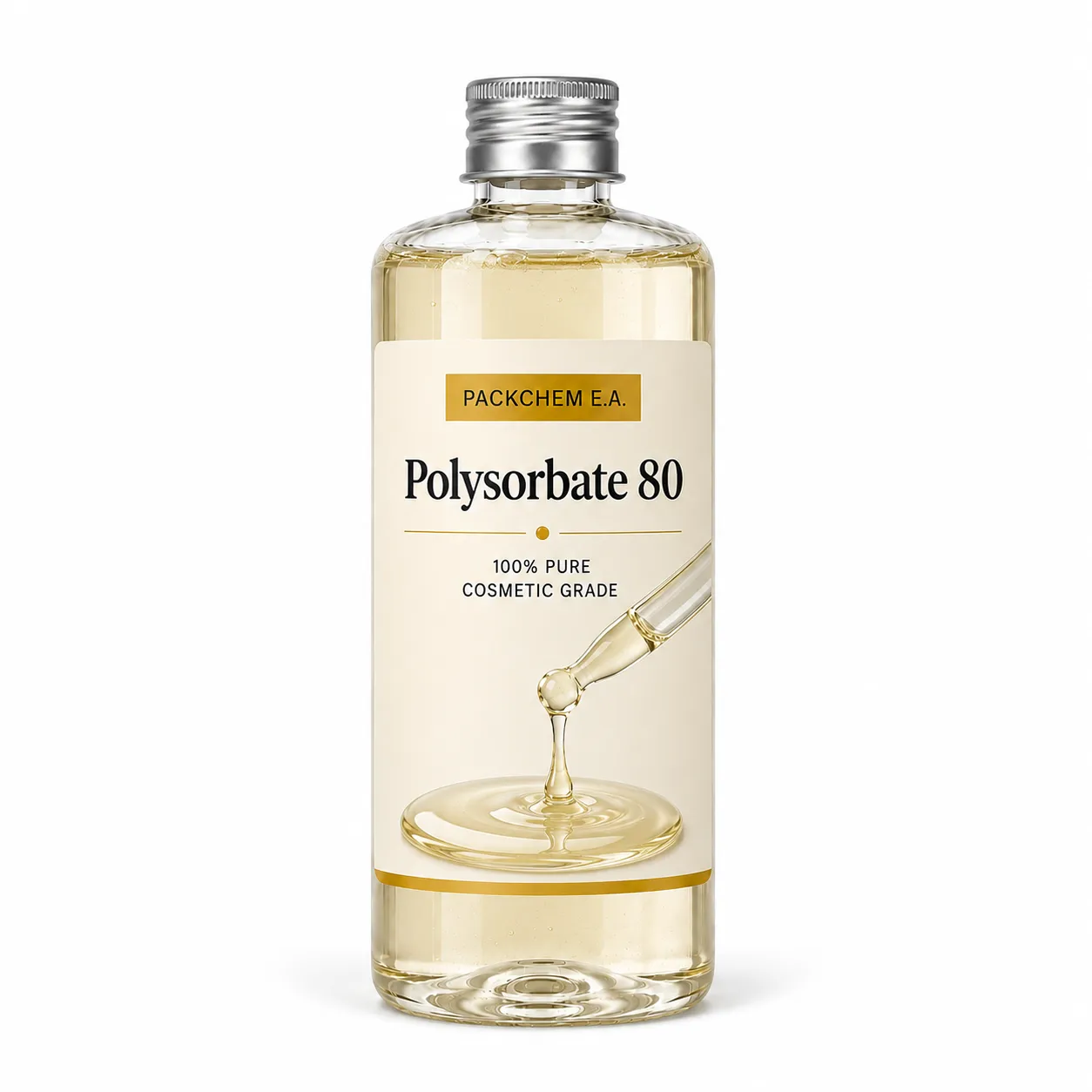
Product Appearance:
- Form: Heavy, syrupy, viscous liquid.
- Color: Deep amber to honey-gold.
- Odor: Mild, fatty/oily characteristic scent.
Solubilizer Profile:
- Primary Target: Heavy Carrier Oils (Coconut, Argan, Shea Butter), oil-soluble dyes, and Zinc Oxide/Titanium Dioxide dispersions.
- Clarity Performance: Moderate; usually results in a translucent, hazy, or milky appearance.
- HLB Value: 15.0 (Strong affinity for lipids).
Possible Usage Rate:
- Solubilizing Ratio: Generally 1:1 to 1:2 (1 part carrier oil to 1–2 parts Polysorbate 80).
- Emulsifying Bath Oils: 5% – 15%.
- Sugar/Salt Scrubs: 2% – 10% (to facilitate rinse-off).
Product Description
Polysorbate 80 (Tween 80) differs from its sibling due to its fatty acid source: Oleic Acid. The “80” in the name signifies the oleate group, which features a much longer and bulkier carbon chain. This structural difference makes Polysorbate 80 a “heavy-duty” solubilizer. While Polysorbate 20 might fail to “hold” a heavy vegetable oil in water, Polysorbate 80 excels at it. As a solubilizer, its most famous role is in bath and shower products. In a bath oil, Polysorbate 80 acts as a “Self-Emulsifying” agent. When the oil hits the bathwater, the Polysorbate 80 immediately grabs the oil and disperses it into the water. Without it, the oil would float on top, creating a slip hazard and leaving the user feeling greasy. It is also essential for “solubilizing” colors—specifically micas and oil-soluble dyes—in bath bombs. It ensures that the color spreads through the water rather than sticking to the sides of the bathtub in a stubborn ring.
Possible Uses/Applications:
- Emulsifying Cleansing Balms: Allowing oil-based cleansers to rinse away cleanly with water.
- Bath Oils & “Blooming” Bath Bombs: Ensuring oils and micas disperse in bathwater rather than sticking to the tub.
- Sugar & Salt Scrubs: Improving the rinse-off profile so the skin feels moisturized but not oily.
- Pigment Dispersion: Helping to evenly distribute oil-soluble dyes and micas in liquid soap and makeup.
Formulation Guidelines
- The “Waterless” Benefit: Polysorbate 80 is often used in anhydrous (water-free) products. When added to a body oil or a cleansing balm at 10%, the product will look like an oil in the bottle but will “bloom” into a milky lotion the moment the user splashes water on their skin. This allows for a clean rinse without a soapy surfactant feel.
- Pigment Dispersion: If you are using oil-soluble pigments in a liquid soap, pre-disperse the pigment in Polysorbate 80 to ensure there are no “specks” or “streaks” in the final product.
- Viscosity Impact: Note that Polysorbate 80 is quite thick. Adding high amounts to a formula can slightly increase the viscosity or “body” of the liquid.
Safety & Stability
- Industrial Standard: It is one of the most rigorously tested ingredients in the world, used even in ice cream (to keep it smooth) and pharmaceuticals.
- Oxidation: Because it is derived from oleic acid (an unsaturated fat), it is more sensitive to light and air than Polysorbate 20. Store it in a cool, dark place to prevent the amber color from darkening or the scent from becoming “rancid.”
Please Note:
All the products supplied are for cosmetic use (cosmetic formulations) – for external use only.
Related products
-
Polysorbate 20
From KSh 300.00 This product has multiple variants. The options may be chosen on the product page